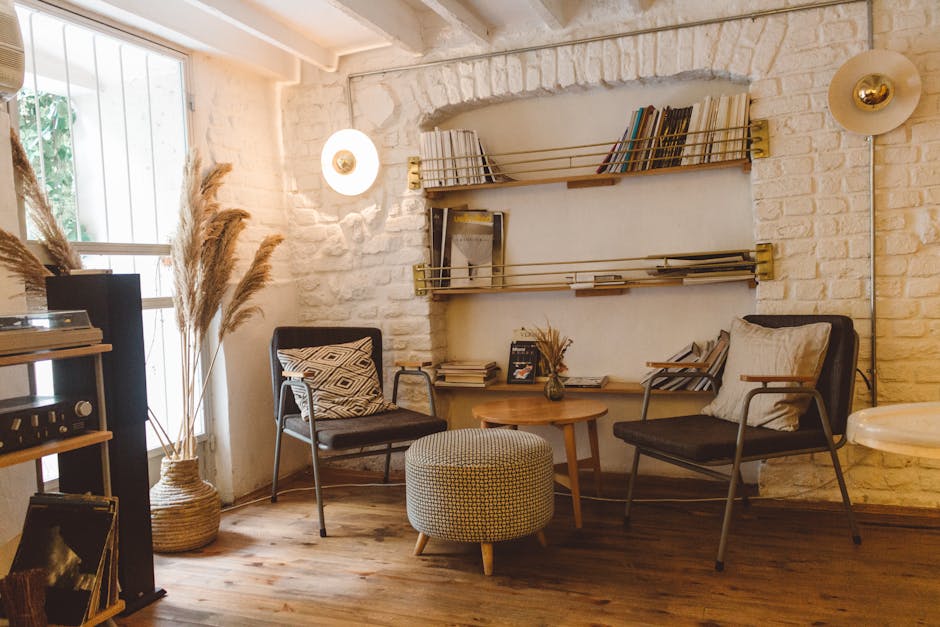
Many households have more sound than silence. The television hums from the next room, voices carry through walls, and outdoor traffic filters indoors regardless of the time of day. For anyone who wants to read without constant interruption, adding a designated quiet corner is practical, but it requires more than just a chair in the corner.
The challenge isn't simply isolation—it's the layering of acoustic comfort, visual focus, and atmospheric warmth that makes a reading space feel genuinely separate from household activity. A well-designed corner relies on three overlapping elements: sound dampening through fabric, task lighting that doesn't strain the eyes, and furniture placement that creates a subtle psychological boundary.
How much noise can soft textures actually reduce?
Fabric absorbs sound energy by trapping air molecules in its weave. Hard surfaces—wood, tile, drywall—reflect sound and amplify it; soft surfaces scatter and slow it down. The thickness and fiber density matter significantly. A thin throw blanket draped over a chair absorbs minimal noise, but layered textiles create measurable acoustic change. Heavy curtains, upholstered furniture, and area rugs work because they interrupt sound waves before they bounce around the room.
In practice, a reading corner benefits most from three fabric layers. First, an area rug (ideally 8 by 10 feet or larger, with a dense pile or jute backing) under and around the seating area absorbs footfalls and lower frequencies. Second, thermal or blackout curtains hung from ceiling to floor along one wall will dampen external noise and room sounds alike, while also reducing light pollution from windows. Third, the seating itself—an upholstered chair, plus a throw blanket across the seat back and armrests—creates a soft envelope that continues the acoustic buffering. This combination won't eliminate noise, but it will reduce ambient household sound by roughly 5 to 10 decibels, which is enough to make conversation and television sounds less intrusive.
What type of lighting supports focus without fatigue?
Reading requires light that reaches the page evenly without glare or shadow. A directional floor lamp positioned to the side and slightly behind the reader's shoulder accomplishes this better than overhead ceiling light. The side angle prevents the lamp from shining directly into the eyes, while the height and position allow light to fall across the page at a natural angle.
Color temperature matters as much as direction. Warm white light—around 2700 to 3000 Kelvin—feels less institutional and more conducive to sustained focus than the cooler 4000K often found in office settings. Warm light also reduces the melatonin-suppressing effect of blue-rich lighting, which means reading in the evening won't disrupt sleep schedules as much. A dimmable lamp gives flexibility: brighter light for evening reading or fine print, softer light for afternoon sessions when natural light is already present.
The lamp base itself should be stable and heavy enough not to tip under the weight of its own cord or when adjusted. A weighted tripod or arc floor lamp provides directional control without consuming floor space the way a traditional base does. Pairing the lamp with a small side table—even one just large enough for a cup of tea and an open book—creates a complete, functional unit that encourages lingering rather than quick browsing.
Where should this space actually fit?
The corner that works best is typically one that faces away from the household's main traffic pattern. A reading nook positioned so the reader can see (but not directly engage with) the door or hallway reduces the startle response to movement and sound from family members passing by. If the room has an exterior wall with a window, placing the chair perpendicular to the wall rather than facing it allows for natural light during the day while the directional lamp handles evening reading.
Walls themselves help. A corner naturally focuses sound and creates a subtle sense of enclosure without feeling cramped. Placing a tall bookshelf or narrow screen behind or beside the chair reinforces the boundary between the reading space and the rest of the room. This isn't about complete isolation—it's about creating enough psychological distance that interruptions feel less jarring.
Start by identifying one corner that's already relatively quiet and faces away from the room's center. Place an area rug, position the directional lamp, add your chair and blanket, then hang or pin a curtain panel along the nearest wall. Notice the actual change in sound and light before adding more layers.